Was the semen analysis results disappointing? Did the doctor diagnose retrograde ejaculation? Is there almost no chance of a successful conception? The use of the ICSI method will help to achieve pregnancy!
Fertilization with ICSI method
Intracytoplasmic sperm injection into the oocyte (ICSI) is a method of assisted reproductive technologies developed to overcome male infertility. The point of the procedure is, that the specialist places each of the pre-selected male cells inside one of the oocytes.
Who is IVF-ICSI indicated for?
The ICSI method is indicated for male infertility in the following cases:
if the fertilizing capacity of sperm is reduced so much that the classical program of in vitro fertilization is either impossible or ineffective. In the case of a complete absence of spermatozoa in the ejaculate (azoospermia), they can be obtained by aspiration or biopsy from the testicle itself or its epididymis;
if the decrease in reproductive function is due to retrograde ejaculation (that is, the transfer of semen into the bladder). In this case, germ cells are extracted from the urine.
Facts about ICSI
Fertilization rate after ICSI is
more than 75%
Sperm movement speed
2-3 mm per minute
Average sperm maturation period
90 days
First pregnancy achieved by ICSI
1992
How does the ICSI procedure work?
Both oocytes and spermatozoa are carefully prepared before ICSI.
After the puncture of the follicles, as a result of which the specialist receives cumulus oophorus complexes, it is necessary to increase the survival of the oocytes, for which they are placed in special media for some time. Then the embryologist denudates the female reproductive gametes (that is, cleans them of cumulus cells) and selects only those that are mature.
At the same time, specialists wash the spermatozoa and activate them, after that they place male cells in a viscous environment. For ICSI, only gametes with the best characteristics are selected (especially important such parameters as correct structure and mobility).
The selected sperm cell is immobilized by cutting off the tail, placed in a needle (microinjector) and then very carefully inserted into the egg cell, which is fixed in the required position with another microneedle (holder).
Fertilized oocytes are placed in special environment containing all the substances that are necessary for the development of the embryo, and for several days they are cultured in multi-gas incubators.
In the framework of the IVF-ICSI program, in the overwhelming majority of cases, controlled stimulation of ovulation with the help of hormonal drugs is first carried out, which allows to achieve maturation of several oocytes at once in the ovaries.
The stimulation plan is developed by the fertility specialist on an individual basis. The duration of the stage can vary from 10 to 28 days.
During this time, the doctor carefully evaluates the response of the ovaries and the state of the woman. In particular, such an ultrasound study as folliculometry is repeatedly carried out, which allows you to track the development of follicles, as well as changes in the thickness and structure of the endometrium.
Second step
For ICSI, it is necessary to obtain the sex gametes of patients.
Puncture of oocytes
When the size of the follicles in the ovaries reaches 18 millimeters, the fertility specialist prescribes a special drug (ovulation trigger), which ensures the release of luteinizing hormone and the final maturation of oocytes. The puncture is performed 36 hours after the injection. This manipulation, which is carried out under ultrasound guidance, usually takes less than half an hour.
Ejaculate collection
If it is not possible to obtain male sex cells from semen, experts use various methods.
So, with retrograde ejaculation, sex gametes are extracted from the urine.
In other cases, a biopsy is used to obtain sperm, which may be:
puncture type, that is, involving aspiration of testicular contents (TESA) or epididymis (PESA);
open type (TESE and microTESE).
In addition, MESA (microsurgery to obtain sex gametes from the epididymis) is sometimes performed.
Third and fourth steps
The next stage involves the fertilization procedure itself, we gave details about it above, and the cultivation of the obtained embryos in multi-gas incubators.
Transfer of one or two embryos, as a rule, is carried out on the 5th day of their development. For 2 weeks after the transfer, woman should take progesterone drugs. What are they needed for? The fact is that progesterone promotes the transformation of the endometrium, which is necessary for the successful implantation of the embryo, and a decrease of the contractile activity of the uterus. To determine if pregnancy has occurred, a blood test for hCG is done on the 14th day after the transfer.
How much does the program cost?
The cost of ICSI depends on how many cells will be fertilized. Thus, the price of the procedure at Nova Clinic is:
17 000 rubles for IVF in the natural cycle;
28 000 rubles for fertilization of 1-4 oocytes;
35 000 rubles for fertilization of 5-10 oocytes.
In addition, the final cost is affected by the use of PICSI technology in sperm collection and the need to obtain male germ cells from the testicle or epididymis by biopsy.
What are the chances of success the first time?
At our center for reproduction and genetics, the chances of success for ICSI are approximately 80%.
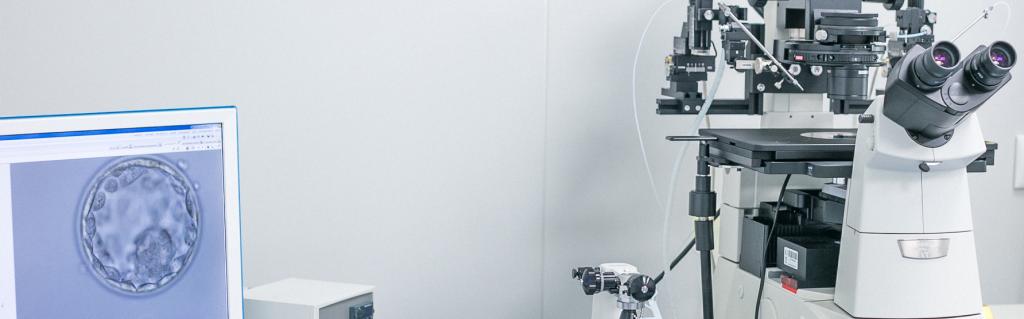
Such high results are based on the qualifications and experience of Nova Clinic embryologists, as well as the availability of the most modern equipment and materials. In particular, we use multigas incubators "Planer" (Denmark), culture media Origio (Denmark) and COOK (Australia), Narishige micromanipulators (Japan) and inverted microscopes Olimpus (Japan).
ICSI and IVF – what is the difference?
ICSI is part of the IVF procedure.
For IVF to be successful, it is necessary that there are enough spermatozoa in the seminal fluid, which have the ability to fertilize an egg. The embryologist places specially treated male and female reproductive cells in a Petri dish, where the fertilization process takes place.
ICSI is performed if there are few (and possibly none) spermatozoa in the semen or if they have poor characteristics. Using this method, the embryologist can select the male reproductive gamete with the best parameters, and then independently place it in the cytoplasm of the egg.
What tests are required?
Before IVF-ICSI, as well as before other ART programs, spouses need to do a number of tests, regulated by a special order of the Ministry of Health of the Russian Federation.
Specifically, the couple will need to be tested for dangerous infections such as HIV, hepatitis B and C, syphilis, and STIs. In addition, microscopic examination of smears of genital discharge and karyotyping will be required.
The woman will be prescribed to take a general urine test; Ultrasound of the pelvic organs, thyroid and mammary glands; coagulogram; tests to determine the level of sex hormones and thyroid hormones; ECG; fluorography.
A man must take a semen analysis and a MAR test.
The basic list of the examinations might be expanded by the attending physician, if it is necessary.
The electronic license is presented on the Roszdravnadzor website
№Л041-01137-77/00316847
Licensing authority: Federal Service for Surveillance in Healthcare, valid indefinitely
ICSI
Was the semen analysis results disappointing? Did the doctor diagnose retrograde ejaculation? Is there almost no chance of a successful conception? The use of the ICSI method will help to achieve pregnancy!
Fertilization with ICSI method
Intracytoplasmic sperm injection into the oocyte (ICSI) is a method of assisted reproductive technologies developed to overcome male infertility. The point of the procedure is, that the specialist places each of the pre-selected male cells inside one of the oocytes.
Who is IVF-ICSI indicated for?
The ICSI method is indicated for male infertility in the following cases:
if the fertilizing capacity of sperm is reduced so much that the classical program of in vitro fertilization is either impossible or ineffective. In the case of a complete absence of spermatozoa in the ejaculate (azoospermia), they can be obtained by aspiration or biopsy from the testicle itself or its epididymis;
if the decrease in reproductive function is due to retrograde ejaculation (that is, the transfer of semen into the bladder). In this case, germ cells are extracted from the urine.
##$universal_facts_block? &TITLE=`Facts about ICSI` &IMAGE=`/local/templates/nova_2020/images/icons/univ_facts.svg` &FACTS_LIST=` Fertilization rate after ICSI is || more than 75% ||| Sperm movement speed || 2-3 mm per minute ||| Average sperm maturation period || 90 days ||| First pregnancy achieved by ICSI || 1992 `##
How does the ICSI procedure work?
Both oocytes and spermatozoa are carefully prepared before ICSI.
After the puncture of the follicles, as a result of which the specialist receives cumulus oophorus complexes, it is necessary to increase the survival of the oocytes, for which they are placed in special media for some time. Then the embryologist denudates the female reproductive gametes (that is, cleans them of cumulus cells) and selects only those that are mature.
At the same time, specialists wash the spermatozoa and activate them, after that they place male cells in a viscous environment. For ICSI, only gametes with the best characteristics are selected (especially important such parameters as correct structure and mobility).
The selected sperm cell is immobilized by cutting off the tail, placed in a needle (microinjector) and then very carefully inserted into the egg cell, which is fixed in the required position with another microneedle (holder).
Fertilized oocytes are placed in special environment containing all the substances that are necessary for the development of the embryo, and for several days they are cultured in multi-gas incubators.
##$universal_information_block? &IMAGE =`/local/templates/nova_2020/images/icons/univ_calendar.svg` &TEXT=`Would you like to make an appointment?` &BTN_TEXT=`Order a call` &BTN_LINK=`record_appointment` &BTN_FANCYBOX=`data-fancybox`##
ICSI stages
First step
In the framework of the IVF-ICSI program, in the overwhelming majority of cases, controlled stimulation of ovulation with the help of hormonal drugs is first carried out, which allows to achieve maturation of several oocytes at once in the ovaries.
The stimulation plan is developed by the fertility specialist on an individual basis. The duration of the stage can vary from 10 to 28 days.
During this time, the doctor carefully evaluates the response of the ovaries and the state of the woman. In particular, such an ultrasound study as folliculometry is repeatedly carried out, which allows you to track the development of follicles, as well as changes in the thickness and structure of the endometrium.
Second step
For ICSI, it is necessary to obtain the sex gametes of patients.
Puncture of oocytes
When the size of the follicles in the ovaries reaches 18 millimeters, the fertility specialist prescribes a special drug (ovulation trigger), which ensures the release of luteinizing hormone and the final maturation of oocytes. The puncture is performed 36 hours after the injection. This manipulation, which is carried out under ultrasound guidance, usually takes less than half an hour.
Ejaculate collection
If it is not possible to obtain male sex cells from semen, experts use various methods.
So, with retrograde ejaculation, sex gametes are extracted from the urine.
In other cases, a biopsy is used to obtain sperm, which may be:
puncture type, that is, involving aspiration of testicular contents (TESA) or epididymis (PESA);
open type (TESE and microTESE).
In addition, MESA (microsurgery to obtain sex gametes from the epididymis) is sometimes performed.
Third and fourth steps
The next stage involves the fertilization procedure itself, we gave details about it above, and the cultivation of the obtained embryos in multi-gas incubators.
Transfer of one or two embryos, as a rule, is carried out on the 5th day of their development. For 2 weeks after the transfer, woman should take progesterone drugs. What are they needed for? The fact is that progesterone promotes the transformation of the endometrium, which is necessary for the successful implantation of the embryo, and a decrease of the contractile activity of the uterus. To determine if pregnancy has occurred, a blood test for hCG is done on the 14th day after the transfer.
How much does the program cost?
The cost of ICSI depends on how many cells will be fertilized. Thus, the price of the procedure at Nova Clinic is:
17 000 rubles for IVF in the natural cycle;
28 000 rubles for fertilization of 1-4 oocytes;
35 000 rubles for fertilization of 5-10 oocytes.
In addition, the final cost is affected by the use of PICSI technology in sperm collection and the need to obtain male germ cells from the testicle or epididymis by biopsy.
What are the chances of success the first time?
At our center for reproduction and genetics, the chances of success for ICSI are approximately 80%.
Such high results are based on the qualifications and experience of Nova Clinic embryologists, as well as the availability of the most modern equipment and materials. In particular, we use multigas incubators "Planer" (Denmark), culture media Origio (Denmark) and COOK (Australia), Narishige micromanipulators (Japan) and inverted microscopes Olimpus (Japan).
ICSI and IVF – what is the difference?
ICSI is part of the IVF procedure.
For IVF to be successful, it is necessary that there are enough spermatozoa in the seminal fluid, which have the ability to fertilize an egg. The embryologist places specially treated male and female reproductive cells in a Petri dish, where the fertilization process takes place.
ICSI is performed if there are few (and possibly none) spermatozoa in the semen or if they have poor characteristics. Using this method, the embryologist can select the male reproductive gamete with the best parameters, and then independently place it in the cytoplasm of the egg.
What tests are required?
Before IVF-ICSI, as well as before other ART programs, spouses need to do a number of tests, regulated by a special order of the Ministry of Health of the Russian Federation.
Specifically, the couple will need to be tested for dangerous infections such as HIV, hepatitis B and C, syphilis, and STIs. In addition, microscopic examination of smears of genital discharge and karyotyping will be required.
The woman will be prescribed to take a general urine test; Ultrasound of the pelvic organs, thyroid and mammary glands; coagulogram; tests to determine the level of sex hormones and thyroid hormones; ECG; fluorography.
A man must take a semen analysis and a MAR test.
The basic list of the examinations might be expanded by the attending physician, if it is necessary.
##$universal_information_block?
&IMAGE =`/local/templates/nova_2020/images/icons/univ_calendar.svg`
&TEXT=`Would you like to make an appointment?`
&BTN_TEXT=`Order a call`
&BTN_LINK=`record_appointment`
&BTN_FANCYBOX=`data-fancybox`##